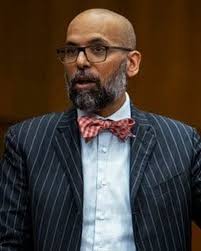
Zia Faruqui Biography: Age, Judge, Wife, Nationality and Ethnicity
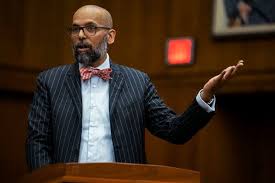
Zia M. Faruqui is one of the most consequential and closely watched United States Magistrate Judges of his generation, serving in the U.S. District Court for the District of Columbia. His career is not the story of a quietly diligent legal functionary who rose through safe, conventional channels. It is the story of a man who spent over a decade in the thick of some of the most complex national security and financial crime cases in American legal history, and then carried all of that experience onto the bench, where he has shown no hesitation in holding both defendants and the government to the same exacting constitutional standard.
you can also read: Judge Warsame Biography
Faruqui was raised with an appreciation for education and public service, values that would anchor every significant decision in his professional life. He pursued both his undergraduate degree and his Juris Doctor (J.D.) at Georgetown University, one of the most prestigious academic institutions in the United States, earning his bachelor’s degree in 2001 and completing his law degree in 2004. Upon graduating, he entered private legal practice as a litigation associate at Willkie Farr and Gallagher LLP in Washington, D.C., where his work concentrated on government investigations and general commercial litigation. That experience in the private sector sharpened his understanding of how legal institutions function from the inside and gave him a foundation for the far more demanding work that was to come.
His transition into public service came when he joined the U.S. Attorney’s Office for the Eastern District of Missouri in St. Louis, where he began his career as a federal prosecutor. He later transferred to the U.S. Attorney’s Office for the District of Columbia, and it was in Washington that his reputation truly solidified. Over a career spanning twelve years as a federal prosecutor, he built a record virtually without parallel in the intersection of national security, financial crime, and emerging technology law. He was involved in dismantling ISIS and Al Qaeda cryptocurrency accounts, led the takedown of the largest darknet child exploitation network in history, prosecuted cases involving North Korean weapons proliferation, and contributed to the seizure of a Russian oligarch’s superyacht under sanctions law. He also represented the Department of Justice at international conferences on financial crime, cryptocurrency regulation, and national security policy.
Beyond his prosecutorial work, he served as an adjunct professor at Harris-Stowe State University, where he taught courses on criminal rehabilitation, and later at Georgetown University, where he teaches Constitutional Law. He was also recognised in the prestigious Service to America Medals (Sammies) during the same year as his judicial appointment. In September 2020, Faruqui was appointed to the federal bench, and he has since become one of the most quoted and closely observed magistrate judges in the country, not for seeking the spotlight, but for refusing to retreat from it when legal principle demands he speak plainly.
Zia Faruqui Age
Zia Faruqui’s exact date of birth has not been publicly disclosed, which is consistent with the private manner in which he has generally conducted his personal life. Based on his academic record, having earned his undergraduate degree from Georgetown University in 2001 and completing his J.D. in 2004, it is reasonable to estimate that he was born sometime in the late 1970s, placing him in his mid-to-late 40s as of 2025 and 2026. This estimated age aligns naturally with the twelve-year federal prosecutorial career he completed before his judicial appointment in September 2020, as well as the depth and maturity visible in the legal reasoning that has defined his time on the bench.
You can also read: James Orengo Biography
What is clear from the timeline of his career is that Faruqui achieved an extraordinary amount in a relatively short span of years. By the time he was appointed to the federal judiciary, he had already built a prosecutorial record that most attorneys spend an entire career trying to approach. His estimated age, while not officially confirmed, reflects someone at the height of his professional powers, combining the sharpness of a still-active legal mind with the seasoned judgment that comes from years of high-stakes courtroom experience.
Zia Faruqui Judge
Zia M. Faruqui was formally appointed as a United States Magistrate Judge for the U.S. District Court for the District of Columbia on September 14, 2020. The timing of his appointment was historically significant. He assumed the bench just weeks before the 2020 presidential election, and within months found himself presiding over one of the most sprawling criminal dockets in American judicial history, the cases arising from the January 6, 2021 Capitol breach, which eventually numbered in the hundreds.
You can also read: David Allan Coe Biography
His judicial record since appointment has been defined by a willingness to engage with genuinely novel legal questions rather than defaulting to established precedent where that precedent no longer adequately addresses the realities of modern crime and governance. He issued a landmark opinion applying U.S. sanctions law to cryptocurrency, a ruling that was years ahead of the broader legal conversation on digital assets. He authorised the seizure of a Russian oligarch’s superyacht under sanctions enforcement, and issued an order compelling Facebook to produce de-platformed records relevant to the genocide of the Rohingya people in Myanmar, a ruling that touched on the intersection of platform accountability and international humanitarian law.
He also oversees the Reentry Court for the District of Columbia, a programme that connects high-risk individuals returning from incarceration to support services, educational opportunities, and rehabilitation resources. His support for prison education programmes, including a coding class delivered in partnership with MIT, reflects a judicial philosophy that views the court’s responsibility as extending beyond the verdict and into the broader social outcomes that follow it.
By 2025 and 2026, Faruqui had become one of the most publicly outspoken federal magistrate judges in the country, issuing scathing written orders criticising the U.S. Department of Justice under the Trump administration for what he described as violations of long-established legal norms and constitutional rights. His willingness to name and document those concerns in formal court orders, rather than managing them quietly, drew national media attention and placed him at the centre of one of the most significant confrontations between the federal judiciary and the executive branch in recent memory.
Zia Faruqui Wife
The personal life of Zia Faruqui has been kept deliberately and consistently private, which is in keeping with the character of a judge who allows his courtroom record to speak for him. His wife has not been publicly identified by name in any official capacity, and Judge Faruqui has not offered details about his personal life through public statements or media interviews.
What is known, from publicly available information connected to the period of his Service to America Medals nomination, is that his wife holds a PhD in Biology and Biomedical Sciences from Washington University in St. Louis, indicating a partner of significant academic and professional accomplishment in her own right. The recognition that accompanied his Sammies nomination during that period was publicly shared by his wife, suggesting a relationship built on genuine mutual pride in each other’s contributions to public life. Beyond these details, the couple’s domestic life remains out of the public record, a choice that appears deliberate and mutually maintained.
Zia Faruqui Nationality
Zia M. Faruqui is an American citizen and has built his entire professional life within the institutions of the United States federal government. He was educated at American universities, prosecuted cases on behalf of the U.S. Department of Justice, and now serves as a judicial officer of the United States District Court. His nationality is unambiguously American, and his career represents a deep and sustained investment in the legal and constitutional frameworks that define American governance.
He has been identified in various media profiles and community platforms as a Pakistani American, reflecting a heritage that connects him to South Asian roots while his professional identity is entirely rooted in the American legal system. His appointment as a federal magistrate judge in Washington, D.C. also makes him one of a very small number of Muslim American federal judges serving in the United States, a distinction that has drawn positive attention from Muslim legal associations and South Asian American communities who view his career as both a personal achievement and a broader representation milestone.
Zia Faruqui Ethnicity
Zia Faruqui is of Pakistani American ethnicity, a background that connects him to the broader South Asian Muslim diaspora in the United States. His name, cultural affiliations, and community associations all point to Pakistani heritage, and he has been publicly profiled within Pakistani American and South Asian American spaces as a prominent figure representing those communities in the upper ranks of the American federal judiciary.
You can also read: Engr Mustapha Gubio Biography
He has been featured in discussions hosted by the Muslim Bar Association of New York (MuBANY) alongside other Muslim magistrate judges, where he spoke about his journey through the legal profession and the role that mentorship and networking played in shaping his path. Those engagements reflect a man who is conscious of what his position means to communities that are often underrepresented at the highest levels of American legal institutions. His presence on the federal bench as a Pakistani American Muslim judge in the District of Columbia has been noted by legal observers and community advocates as a significant milestone, one that Faruqui himself appears to carry with a sense of both personal pride and professional responsibility.