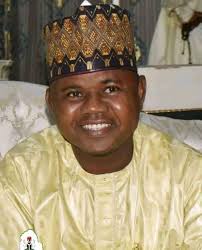
Engr Mustapha Gubio Biography: Age and State
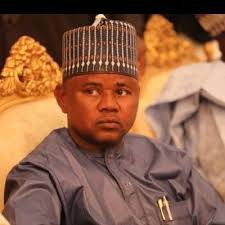
Engr Mustapha Gubio is a Nigerian professional engineer, public administrator, and politician who has built a reputation as one of the most technically capable and development-focused commissioners in the history of Borno State government. He carries the professional title FNSE, which stands for Fellow of the Nigerian Society of Engineers, the highest professional grade awarded by that body to engineers who have demonstrated sustained excellence, ethical conduct, and significant contribution to the engineering profession in Nigeria. That designation is not honorary. It is earned through years of verifiable professional achievement, and its presence alongside his name reflects the substance behind a career defined by technical competence rather than political showmanship.
You can also read: Davis Chirchir Biography
Gubio was born and raised in Maiduguri, the capital city of Borno State, located in the North-East geopolitical zone of Nigeria. Maiduguri is one of Nigeria’s most historically layered cities, sitting at the crossroads of ancient trade routes and serving today as the administrative and commercial hub of the entire Lake Chad Basin region. Growing up there meant developing an acute awareness of developmental challenges, compounded by the devastating consequences of the Boko Haram insurgency, which from around 2009 onward tore through communities across Borno State. Gubio’s entire professional identity as a public servant has been shaped by that context, by the urgent, practical reality of a state that needed to be rebuilt not once but repeatedly. He is of Kanuri ethnic heritage, part of one of the most historically significant peoples in West African history, the rulers of the ancient Kanem-Bornu Empire that endured for nearly a thousand years. He is a Muslim by faith, a dimension of his identity that informs both his values and his approach to public service.
His educational foundation was built on a strong aptitude for science and technical subjects. He pursued his passion for engineering through formal university training in Nigeria, graduating with an engineering degree that qualified him for professional registration and ultimately led to his award of FNSE status by the Nigerian Society of Engineers. Before entering public administration, he worked as a professional engineer in both the public and private spheres, building the technical and project management expertise that would later make him effective as a commissioner overseeing multi-billion naira infrastructure programmes in a conflict-affected state.
You can also read:David Allan Coe Biography
His appointment into the Borno State Executive Council by Governor Babagana Umara Zulum came as a recognition of that accumulated expertise. He first served as Commissioner for Reconstruction, Rehabilitation and Resettlement, directly overseeing the restoration of public facilities and essential services in conflict-affected communities including Bama, Konduga, Damasak, and Mafa. He subsequently served as Commissioner for Works and Housing, where his engineering background found its most direct application, overseeing road construction, public infrastructure, and housing development programmes across both urban Maiduguri and rural communities spread across all twenty-seven local government areas of the state. He became known for a hands-on management style that involved regular site inspections and direct accountability for project delivery.
In April 2026, Governor Zulum personally received Gubio alongside his APC gubernatorial nomination forms in Abuja, in the presence of Senator Mohammed Tahir Monguno of Borno North. Gubio was the first aspirant in Borno State to formally obtain the APC gubernatorial nomination form for the 2027 general elections. Zulum, in publicly explaining his decision to anoint Gubio as his preferred successor, stated that Gubio had demonstrated the same discipline, courage, and uncommon commitment to public service that had defined his own entry into executive governance through the reconstruction portfolio.
The political landscape around Gubio’s candidacy consolidated further when a stakeholders’ meeting chaired by Vice President Kashim Shettima resolved that Senator Kaka Shehu Lawan, who had also indicated gubernatorial ambitions, would step down to clear the path for Gubio’s emergence as the consensus APC candidate. The meeting was attended by Governor Zulum, APC National Working Committee member Ali Bukar Dalori, Minister of Agriculture Abubakar Kyari, members of the National Assembly from Borno, and the Borno Elders Forum. The Forum of Special Advisers to Governor Zulum, comprising thirty-eight advisers from all twenty-seven local government areas, also issued a unanimous statement of support, describing his record as one of dedicated and meritorious service worthy of the highest office in the state.
Engr Mustapha Gubio Age
Engr Mustapha Gubio’s exact date of birth has not been formally published in any official government record or public statement. He has not disclosed his birth date in any of his public appearances, political declarations, or media engagements, a practice that is relatively common among Nigerian politicians and public officials who tend to keep precise personal details out of the public domain. However, based on the trajectory of his career, the seniority implied by his FNSE designation, and the depth of his two commissioner-level appointments in Borno State government, it is reasonable to estimate that Gubio was born in the early to mid-1960s, placing him in his early to mid-sixties as of 2026.
That age range is consistent with a man who completed a university engineering degree in Nigeria in the late 1970s or early 1980s, built a professional engineering career of sufficient depth and distinction to qualify for Fellow status in the Nigerian Society of Engineers, and subsequently moved into senior government administration. His physical presentation at public events, including the April 2026 Abuja ceremony, is consistent with a man in his early sixties who remains active and intellectually engaged. For a man of his generation, the era in which he grew up saw Nigeria transition from military rule through the oil boom years, the structural adjustment period of the 1980s, and the return to civilian democracy in 1999. Engineers of that generation who chose public service over the private sector made a deliberate and patriotic choice, and Gubio’s willingness to serve in the reconstruction and works portfolios of a conflict-affected state throughout the most dangerous years of the Boko Haram insurgency confirms the depth of that commitment.
You can also read: Sabastian Sawe Biography
Engr Mustapha Gubio State
Engr Mustapha Gubio’s state is Borno State, located in the North-East geopolitical zone of Nigeria. It is Nigeria’s largest state by land area, covering approximately 70,898 square kilometres, and it shares international borders with three countries: Niger to the north, Chad to the northeast, and Cameroon to the east. That geographic position has given Borno a character shaped by centuries of cross-border trade, cultural exchange, and, in more recent decades, complex security dynamics in a region where state authority has competed with armed non-state actors. The state capital, Maiduguri, is the city where Gubio was born, raised, and built his entire professional career, and the base from which he is now pursuing the governorship.
Borno State is home to multiple ethnic groups, with the Kanuri being the historically dominant group to which Gubio belongs. Other significant communities include the Shuwa Arab, Marghi, Tera, Babur, Bade, Fulani, and Mandara peoples, making it one of Nigeria’s most ethnically diverse states. The state has a population exceeding 5 million people and an economy historically anchored in agriculture, livestock, and trade, though the Boko Haram insurgency that erupted in 2009 severely disrupted agricultural activity, displaced millions of residents, and destroyed infrastructure across a large portion of the state’s territory.
Borno’s political landscape since civilian rule was restored in 1999 has been dominated by the All Progressives Congress and its predecessor parties. The current Governor, Professor Babagana Umara Zulum, has drawn national and international attention for continuing to oversee infrastructure and reconstruction programmes despite the ongoing security challenges posed by Boko Haram and its splinter faction ISWAP. Gubio’s entire public service record has been built within this context, and his candidacy for the governorship represents a continuation of the same philosophy of practical, engineering-led governance that has defined the Zulum administration. His roots in Maiduguri, his Kanuri heritage, his professional FNSE standing, and his track record of delivery across both the reconstruction and works portfolios position him as a candidate whose biography is inseparable from the story of the state he now seeks to lead.