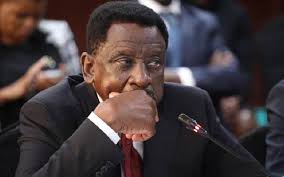
James Orengo Biography: Age, Wife and Net Worth
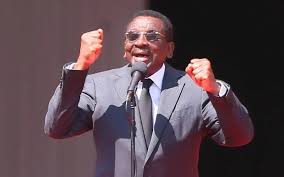
James Aggrey Bob Orengo is one of Kenya’s most consequential public figures, a man whose life has straddled the courtroom, the parliament, and the streets of political protest with equal conviction and courage. He was born on February 22, 1951, in Kasipul Kabondo, a community in what is today Homa Bay County in western Kenya. His father, Apolo Stefano Olunga Orengo, served as a senior police chief, and his mother, Josfina Atieno Olunga Orengo, raised her children with a strong sense of justice and community responsibility. Those early values never left him.
You can also read: Umashi Dhlamini Biography
Orengo grew up during the final years of colonial rule and the first decade of an independent Kenya, a period that shaped a generation of young Kenyans with an acute awareness of power, rights, and the cost of silence. He attended Ambira Primary School from 1954, completing his primary education in 1964, before proceeding to the prestigious Alliance High School in January 1965, where he completed both his O-levels and A-levels by 1970. In 1971, he enrolled at the University of Nairobi to study law, and within two years had risen to become the President of the Student Organisation of Nairobi University, using that platform to organize protests against injustice and to build the activist instincts that would define his entire public life. He graduated in 1974 with a Bachelor of Laws degree and subsequently enrolled at the Kenya School of Law, completing his bar examinations and earning admission as an Advocate of the High Court of Kenya.
His legal career began under difficult circumstances. The government of President Daniel arap Moi barred him from completing his pupilage in Nairobi, forcing him to practice in Kericho instead, a deliberate attempt to sideline a man they already viewed as a threat. It did not work. Even from a distance, Orengo remained a thorn in the side of the single-party establishment, organizing demonstrations and speaking out against repression with a fearlessness that was remarkable given the risks involved. He was imprisoned, exiled across Tanzania, Uganda, and Zimbabwe, and subjected to conditions that he later described as harrowing. His repatriation to Kenya came through a swap arrangement involving soldiers connected to the failed 1982 coup attempt against President Moi, a chapter of his life that few Kenyan politicians can claim as part of their personal history.
His political career began in earnest in 1980 when he was elected as the Member of Parliament for Ugenya Constituency on a KANU ticket in a by-election, becoming at 29 years old the youngest MP in Kenyan history at the time. He went on to serve Ugenya again in 1992 and 1997 under the Ford-Kenya banner, and after a brief period out of parliament following the 2002 elections, in which he also made an unsuccessful presidential bid under the Social Democratic Party, he returned to win Ugenya back in 2007 on an Orange Democratic Movement ticket. He was a key spokesman for ODM during the painful negotiations that followed the disputed 2007 elections, and was subsequently appointed Minister for Lands in the Grand Coalition Government formed under the National Accord Act of 2008, a position he held until 2013.
In that ministerial role, Orengo made national headlines when he exposed the Grand Regency Hotel scandal, revealing that the property had been sold to Libyan buyers under the direction of the then Finance Minister without proper transparency. It was a bold act that confirmed his reputation as someone unwilling to look the other way regardless of the political cost. From 2013 to 2022, he served as Senator for Siaya County, and in 2018 was appointed Senate Minority Leader by ODM party leader Raila Odinga. He made legal history in 2017 as the lead counsel in the Supreme Court case that resulted in the annulment of the presidential election, a first in African legal history. In August 2022, he won the Siaya County governorship, and has since focused on healthcare expansion, agricultural modernization, infrastructure development, and youth empowerment across the county.
James Orengo Age
James Orengo was born on February 22, 1951, which makes him 74 years old as of 2026. He was born under the zodiac sign of Pisces and belongs to the generation of Kenyans who came of age during the country’s transition from colonial rule to independence. That generational experience, marked by political awakening, grassroots activism, and a willingness to confront authority, has remained deeply embedded in his character and his public conduct throughout his life.
You can also read: Sabastian Sawe Biography
At 74, Orengo is a figure whose age brings with it an extraordinary weight of lived experience. He has served Kenya across more than four decades of public life, witnessing and actively shaping the country’s democratic evolution from the repressive single-party era of the 1980s through the multiparty transition of the 1990s, the constitutional reforms of the 2000s, and the increasingly complex political landscape of the present day. He was 29 when he first entered parliament, 51 when he ran for president, 61 when he became a senator, and 71 when he was elected governor of Siaya County. Each of these milestones came at a different stage of his life and brought with it a different set of responsibilities and challenges.
What is striking about Orengo’s age relative to his career is that he has never given any indication of slowing down. His December 2025 State of the County Address was described as energetic and ambitious, setting out bold targets for revenue growth, agricultural productivity, healthcare investment, and infrastructure development for Siaya County. For a man of his generation to still be setting hundred-percent revenue growth targets and driving major capital projects reflects an appetite for public service that age has done nothing to diminish.
James Orengo Wife
James Orengo is married to Betty Kaari Murungi, a distinguished Kenyan advocate, human rights expert, and specialist in transitional justice and gender-based violence. Betty is a woman of considerable professional standing in her own right, widely respected within Kenya’s legal and civil society circles for her work on accountability, reconciliation, and the rights of survivors of conflict-related violence. She is the sister of Kiraitu Murungi, the former Governor of Meru County and longtime political figure, making their marriage a union of two families with deep roots in Kenyan public life.
You can also read: Alessandro De Rosa Morricone
The couple have built their family largely away from the public eye. Together they have seven children, namely Lavender, Lynette, Zeni, Josephine, Michael, Steven, and Bob, though some reports list six children with the seventh remaining unconfirmed in official sources. Orengo has consistently kept his family out of the media spotlight, a deliberate choice that reflects his long-held view that the personal sphere deserves protection from the pressures of public life. Of his children, Michael Orengo is perhaps the best known, having attended the prestigious Brookhouse School in Nairobi before pursuing his higher education at a leading institution in the United Kingdom. His daughter Lavender attracted brief public attention when she got married, though the family generally avoids media engagement.
Betty Murungi has been described by those close to the couple as a strong intellectual and emotional anchor in Orengo’s life, someone whose expertise in human rights law complements and deepens his own long commitment to justice and constitutionalism. Their partnership spans decades and has endured some of the most turbulent periods of Kenyan political history, including the years when Orengo was imprisoned and exiled, a testament to the resilience of both individuals.
James Orengo Net Worth
James Orengo has never publicly declared a specific figure for his personal net worth, and no official financial disclosure has placed a confirmed value on his total assets. However, based on his professional history and the various income streams attached to his career, financial analysts and political commentators have estimated his net worth at approximately Ksh 500 million, equivalent to roughly 3 million US dollars, making him one of the more financially stable among Kenya’s senior political figures, though not among the country’s wealthiest public officeholders.
His wealth has been built across three primary pillars. The first and most substantial is his legal career. As a Senior Counsel, the highest professional grade in the Kenyan legal fraternity, Orengo commands premium fees for his courtroom work. His law firm, operating under the name JAB Orengo Advocates and located on the sixth floor of Lonrho House along Standard Street in Nairobi, has handled some of the most high-profile cases in Kenya’s recent legal history. These include representing Raila Odinga and Kalonzo Musyoka in the 2013 presidential election petition, and leading the legal team that successfully secured the annulment of the 2017 presidential election before the Supreme Court, a case that made global headlines. Cases of that magnitude attract legal fees that are substantial by any measure.
The second pillar is his political career, which has spanned over four decades of continuous public service. As a member of parliament, minister, senator, and now governor, Orengo has drawn salaries, allowances, and benefits across multiple terms in office. The Kenyan government provides its senior officials with housing, transport, and administrative support, all of which contribute to the overall financial profile of long-serving public figures.
The third pillar consists of property and investment interests. While Orengo is not publicly associated with large business ventures, he is understood to hold land and property assets consistent with someone who has maintained a professional income over several decades. He is not considered ostentatious in his personal lifestyle in political circles, though he has occasionally been noted for his preference for high-quality clothing and personal presentation, a detail that surfaced in published accounts of his time as a cabinet minister. Taken together, these income sources paint the picture of a man whose financial standing is the product of a long, disciplined, and multi-dimensional professional life rather than any single windfall or business enterprise.