Judge Warsame Biography : Age and Tribe
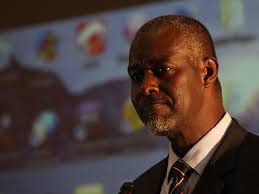
Justice Mohamed Abdulahi Warsame is one of Kenya’s most distinguished and highly regarded members of the judiciary, a jurist whose career spans more than two decades of active service on the bench and whose name has become synonymous with judicial efficiency, integrity, and a commitment to the rule of law. His full name is Mohamed Abdulahi Warsame, and he has built a professional record that places him among the most consequential judges in the history of the Kenyan court system. He holds a Bachelor of Laws degree from the University of Nairobi and a Diploma in Law from the Kenya School of Law, the two foundational qualifications through which most Kenyan advocates and judges enter the legal profession.
You can also read: Vaibhav Suryavanshi Biography
Before ascending to the bench, Warsame spent a significant number of years as a practicing Advocate of the High Court of Kenya, gaining the kind of practical courtroom experience that informs the best judicial minds. That experience in private legal practice gave him a thorough understanding of how the law operates at the level of the individual client, a perspective that is often visible in the clarity and practicality of his judgments. His transition from advocacy to the judiciary came in 2003, when he was appointed a Judge of the High Court of Kenya, a posting that marked the beginning of what would become one of the most productive judicial careers of his generation.
During his years as a High Court judge, Warsame served in multiple divisions of the court, including the Commercial Division, the Criminal Division, and the Judicial Review Division, the last of which he led as presiding judge. The breadth of that exposure gave him a command across different areas of law that very few judges possess, and his efficiency in clearing cases became one of the most noted features of his judicial tenure. Wherever he sat, backlogs reduced. The speed and discipline with which he handled his caseload earned him a reputation as a judge who took seriously the principle that justice delayed is justice denied.
In 2012, he was elevated to the Court of Appeal of Kenya, the second-highest court in the country, where he continued to demonstrate the same qualities of thoroughness and case management that had distinguished his High Court service. His record of case clearance at the Court of Appeal was described as the highest of any judge at that level, a distinction that speaks not just to speed but to the quality and consistency of his legal reasoning. He has sat on panels that have decided cases across civil, commercial, criminal, and constitutional matters, contributing to a body of jurisprudence that has shaped Kenyan law across multiple domains.
In 2013, Justice Warsame was elected as Commissioner to the Judicial Service Commission by his fellow Court of Appeal judges, pursuant to Article 171(2)(c) of the Constitution of Kenya. This placed him at the centre of the governance and administration of Kenya’s entire judiciary. He served on both the Finance and Administration Committee and the Human Resource Committee of the JSC, contributing to decisions that affected the management, discipline, and welfare of judicial officers across the country. His tenure at the JSC was at one point legally challenged and temporarily frozen, but he ultimately continued in the role, with the Law Society of Kenya publicly supporting his gazettement.
Among the most humanising chapters of his career is his service as Chairman of the Community Service and Probation Committee, during which he authorised the release of over 7,000 petty offenders from prisons across Kenya. This initiative reflected a judicial philosophy that looks beyond mere punishment toward rehabilitation, recognising that consigning minor offenders to overcrowded prisons produces worse social outcomes than structured community-based alternatives. That decision touched thousands of families and communities in ways that no written judgment alone could.
In 2026, Justice Warsame was nominated for appointment to the Supreme Court of Kenya, filling the vacancy created by the passing of Justice Mohamed Khadhar Ibrahim in December 2025. The Judicial Service Commission stated that he had demonstrated all the qualities required by the Constitution of a Supreme Court judge. During his JSC interview, when asked whether he would accept a subordinate role among the existing bench, he responded characteristically, noting that in more than two decades on the bench he had never gone against the will of the Chief Justice, having served under four different Chief Justices, and that he did not expect that to change.
Judge Warsame Age
Justice Mohamed Abdulahi Warsame does not appear to have his date of birth formally listed in publicly available official judicial profiles, which is not unusual for senior Kenyan judges whose personal biographical details are often kept minimal in official records. However, based on his career timeline, it is possible to construct a reasonable estimate of his age. He was appointed to the High Court in 2003, which means he had by that point already completed his law degree at the University of Nairobi, his diploma at the Kenya School of Law, and a substantial period in private legal practice as an advocate. Assuming a standard academic timeline and approximately ten to fifteen years of private practice before joining the bench, a birth year in the range of the late 1950s to mid-1960s is broadly consistent with the available evidence.
You can also read: IPS Ajay Pal Sharma Biography
This would place Justice Warsame in his early to mid-sixties as of 2026, consistent with the profile of a senior Court of Appeal judge in Kenya. The mandatory retirement age for Kenyan judges under the 2010 Constitution is 70 years, and the fact that he was nominated for the Supreme Court in early 2026 strongly suggests that he still has a number of active judicial years ahead of him. Had he been close to retirement age, the JSC would not plausibly have put him forward for elevation to the highest court in the land.
His career longevity and intellectual sharpness, both widely remarked upon by colleagues and legal commentators, are consistent with someone who brings both the depth of long experience and the continued engagement of a mind that has not settled into complacency. Twenty-three years on the bench, across the High Court and the Court of Appeal, producing the highest case clearance record at the appellate level, is not the work of a judge coasting toward retirement. It is the work of a man who still finds the law genuinely compelling.
Judge Warsame Tribe
Justice Mohamed Abdulahi Warsame is of Kenyan Somali ethnic origin, belonging to the Somali community, one of the oldest and most historically significant ethnic groups in Kenya. The Somali people of Kenya are a Cushitic-speaking community and are predominantly Sunni Muslim by faith. They are classified among Kenya’s forty-four officially recognised ethnic communities and constitute the sixth largest ethnic group in the country, with a population estimated at approximately 2.78 million according to the 2019 national census.
You can also read: Alessandro De Rosa Morricone
Kenya’s Somali community has historically been concentrated in the North Eastern region of the country, encompassing the counties of Mandera, Wajir, and Garissa, which border Somalia to the north and east. This region, formerly known as the Northern Frontier District under British colonial administration, was and remains one of the most historically marginalised parts of Kenya. The community’s experience of political suspicion and institutional underrepresentation across much of post-independence Kenyan history makes the rise of figures like Justice Warsame to the highest levels of the national judiciary all the more significant. He follows in a tradition of groundbreaking representation established by the late Justice Mohamed Khadhar Ibrahim, who was the first Kenyan of Somali origin to serve on the Supreme Court before his passing in December 2025.
The surname Warsame is a traditional Somali name with deep cultural roots in the community. In Somali naming conventions, the middle name typically reflects the father’s first name and the surname the grandfather’s, forming a patronymic chain that preserves family lineage across generations. The name Abdulahi, which forms the middle part of Justice Warsame’s full name, is a widely used Somali and Islamic name derived from Arabic, meaning “servant of God”. His full name, Mohamed Abdulahi Warsame, is constructed entirely within the Somali naming tradition.
The Somali community’s relationship with the Kenyan state has been complex and at times deeply troubled, shaped by the Shifta War of the 1960s, decades of marginalisation and ethnic profiling, and more recent discrimination linked to security concerns in the region. Against that backdrop, the elevation of a Somali jurist to the Court of Appeal and potentially to the Supreme Court represents not only a personal achievement but a broader statement about inclusion, merit, and the ongoing project of building a Kenyan judiciary that reflects the full diversity of the nation it serves.