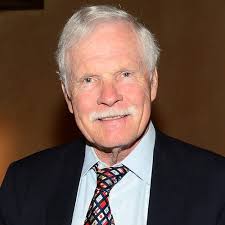
Ted Turner Biography: Age, Wife, Children, Dead and Religion
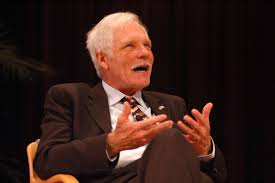
Robert Edward Turner III, known to the world as Ted Turner, was one of the most consequential and colourful media entrepreneurs of the twentieth century, a man whose instincts for communication, timing, and disruption permanently altered the way humanity receives information. He was born in Cincinnati, Ohio, on November 19, 1938, to Robert Edward Turner II, a billboard advertising magnate, and Florence Turner. When he was nine, his family relocated to Savannah, Georgia, where the Southern identity and restless competitive spirit that would define his entire personality took deepest root.
You can also read: Kate Middleton Biography
His childhood was shaped by a difficult relationship with his demanding father, who disciplined him harshly and sent him to strict Southern military academies. He enrolled at Brown University in 1956 but was expelled three years later, reportedly for having a woman in his dormitory. He then joined his father in the family advertising business in Atlanta, becoming general manager of a branch office in 1960. When his father died by suicide in 1963, Turner took over the company and immediately began transforming it from a billboard business into something far more ambitious. He acquired a struggling UHF television station in Atlanta, rebuilt it, and began transmitting it via satellite as a superstation that eventually reached millions of cable subscribers across the country, establishing the template for the broader cable revolution that followed.
On June 1, 1980, Turner launched CNN, the first 24-hour all-news cable network. Critics dismissed the venture as absurd and branded it “Chicken Noodle News.” They were wrong. CNN grew steadily through the 1980s and became a defining journalistic force during the Gulf War of 1991, when its coverage from inside Baghdad gave it a global audience and redefined real-time journalism. He expanded his media empire across TNT, the Cartoon Network, and Turner Classic Movies. Beyond broadcasting, he won the America’s Cup as a yachtsman, owned the Atlanta Braves baseball franchise, donated one billion dollars to create the United Nations Foundation, co-founded the Nuclear Threat Initiative, and became one of the largest private landowners in the United States, using his ranches to restore the near-extinct American bison herd. He was named Time magazine’s Man of the Year in 1991.
In his final years, Turner withdrew from public life after being diagnosed with Lewy body dementia. He died on May 6, 2026, at his home near Tallahassee, Florida, at the age of 87, surrounded by his family. CNN chairman Mark Thompson described him as intrepid, fearless, and always willing to trust his own judgment, adding that he was and always will be the presiding spirit of CNN.
Ted Turner Age
Ted Turner was born on November 19, 1938, and died on May 6, 2026, at the age of 87, having missed his 88th birthday by six months. He lived through nearly nine decades of American history, from the Great Depression through the Second World War, the Cold War, the civil rights movement, the Vietnam era, the rise of cable television, the digital revolution, and into the social media age. The arc of his life ran in precise parallel to the transformation of American media from local radio and print newspapers to a global, twenty-four-hour, multi-platform information ecosystem, and he was not a passive witness to that transformation but one of its chief architects.
You can also read: Sarian Martin Biography
He was born under the zodiac sign of Scorpio, and the qualities associated with that sign, intensity, strategic vision, a refusal to accept conventional limits, and an occasionally destabilising candour, were present in him throughout his life. His nicknames captured that personality precisely. “The Mouth of the South” acknowledged his Southern roots and his habit of speaking without diplomatic filter. “Captain Outrageous” acknowledged the consequences of that habit when applied to religion, world politics, or rival media figures. He remained intellectually restless and publicly engaged well into his seventies before Lewy body dementia began to diminish the extraordinary vitality that had powered one of the most eventful careers in American business history.
Ted Turner Wife
Ted Turner was married three times. His first marriage was to Judy Nye in 1960, during the early years of his career in his father’s advertising business. The marriage produced two children, Laura and Robert Edward IV, known as Teddy, before ending in divorce a few years later. His second marriage was to Jane Smith in 1964. That union lasted over a decade and produced three more children, Rhett, Beauregard, and Sarah Jean, before it too ended in divorce as Turner’s professional ambitions and personal life expanded beyond the boundaries of a conventional domestic arrangement.
You can also read: Yesha Sagar Biography
His third and most publicly celebrated marriage was to Jane Fonda, the Academy Award-winning actress and activist, whom he married in 1991. Their union joined two of the most recognisable and controversial personalities in American public life, placing them at the intersection of media power, environmental activism, and progressive politics. The marriage generated as many headlines as either of their individual careers and was regarded by those who knew them as a genuinely intellectually stimulating partnership. They divorced in 2001, the same year Turner suffered catastrophic financial losses when the AOL-Time Warner merger collapsed. Both maintained respectful public stances toward each other in the decades that followed, and Turner did not marry again after their separation.
Ted Turner Children
Ted Turner is survived by his five children, fourteen grandchildren, and two great-grandchildren. His five children come from his first two marriages. From his marriage to Judy Nye, he had Laura Lee Turner and Robert Edward Turner IV, known as Teddy. From his marriage to Jane Smith, he had Rhett Turner, Beau Turner, and Sarah Jean Turner. The Turner children grew up in circumstances shaped by their father’s extraordinary ambition and his frequently disruptive professional schedule. He acknowledged in his autobiography that the hours his career consumed had come at a cost to his family relationships, expressing genuine regret about time he could not recover.
In his later decades, as the pace of his business life slowed and his health declined, he spoke more openly about the importance of family and described his children and grandchildren as among the most meaningful dimensions of his legacy. Beau Turner, who shares his father’s deep commitment to land conservation and wildlife, has been particularly active in the stewardship of the Turner land holdings and the bison ranching programme that his father built into one of the largest private herds in North America. The family’s continued involvement in conservation and philanthropy has preserved and extended a legacy that began with Turner’s landmark billion-dollar gift to the United Nations.
Ted Turner Dead
Ted Turner died on May 6, 2026, at the age of 87, at his home near Tallahassee, Florida. His family confirmed in a statement released by Turner Enterprises that he died after a long battle with Lewy body dementia, and that he passed away peacefully surrounded by his family. CNN anchor Wolf Blitzer announced the death on air, delivering the news to an audience whose existence was itself a direct consequence of the man whose passing he was reporting.
Turner had disclosed his diagnosis in September 2018, just before his 80th birthday, describing Lewy body dementia as a degenerative disease that progressively impairs memory, movement, behaviour, and mood. He managed his condition with considerable dignity in the years that followed, withdrawing gradually from public life as the disease advanced. The tributes that followed his death came from across the worlds of media, politics, conservation, and sport. CNN led its coverage with extensive obituary programming. Former colleagues, world leaders, and public figures on multiple continents paid tribute to a man who had changed the information landscape of the modern world not through political authority but through the radical insistence that news should be available to everyone, everywhere, at all times.
Ted Turner Religion
Ted Turner’s relationship with religion was one of the most interesting and publicly discussed dimensions of his character. He was raised in Savannah, Georgia, as an Episcopalian, the relatively formal Protestant denomination common among the Southern upper middle class in the mid-twentieth century. His early religious formation was conventional and shaped by community expectation, and there was nothing in his upbringing to suggest the profound religious estrangement that would later define his public statements on faith.
You can also read: Ennio Morricone Biography
The event that permanently altered that relationship was the illness and death of his younger sister, Mary Jean. She contracted a rare and brutal form of lupus as a child, which left her with brain damage and in severe pain for years before she died. Turner later described the experience as the moment his faith broke, saying Christianity could offer him no answers to why an innocent child should suffer in that way, and that the questions it raised in him were never resolved. He described himself in various interviews across his career as an agnostic, and on other occasions stated more bluntly that he had rejected the exclusive claims of institutional Christianity in favour of a broader ethical and spiritual sensibility rooted in his commitment to the natural world.
He made remarks critical of Christianity that were controversial, most notably describing it as a religion for losers, a comment he subsequently acknowledged was intemperate and apologised for. His actual spiritual position was considerably more nuanced. He expressed deep reverence for the environment, for the planet’s ecosystems, and for humanity’s moral responsibility toward both. His billion-dollar gift to the United Nations, his nuclear disarmament work, his bison conservation programme, and his climate change advocacy all reflected a moral seriousness that, whatever its theological underpinning, was oriented unmistakably toward the common good of humanity and the natural world. Whether that constitutes a form of faith is a question he left open, and the openness was deliberate.